

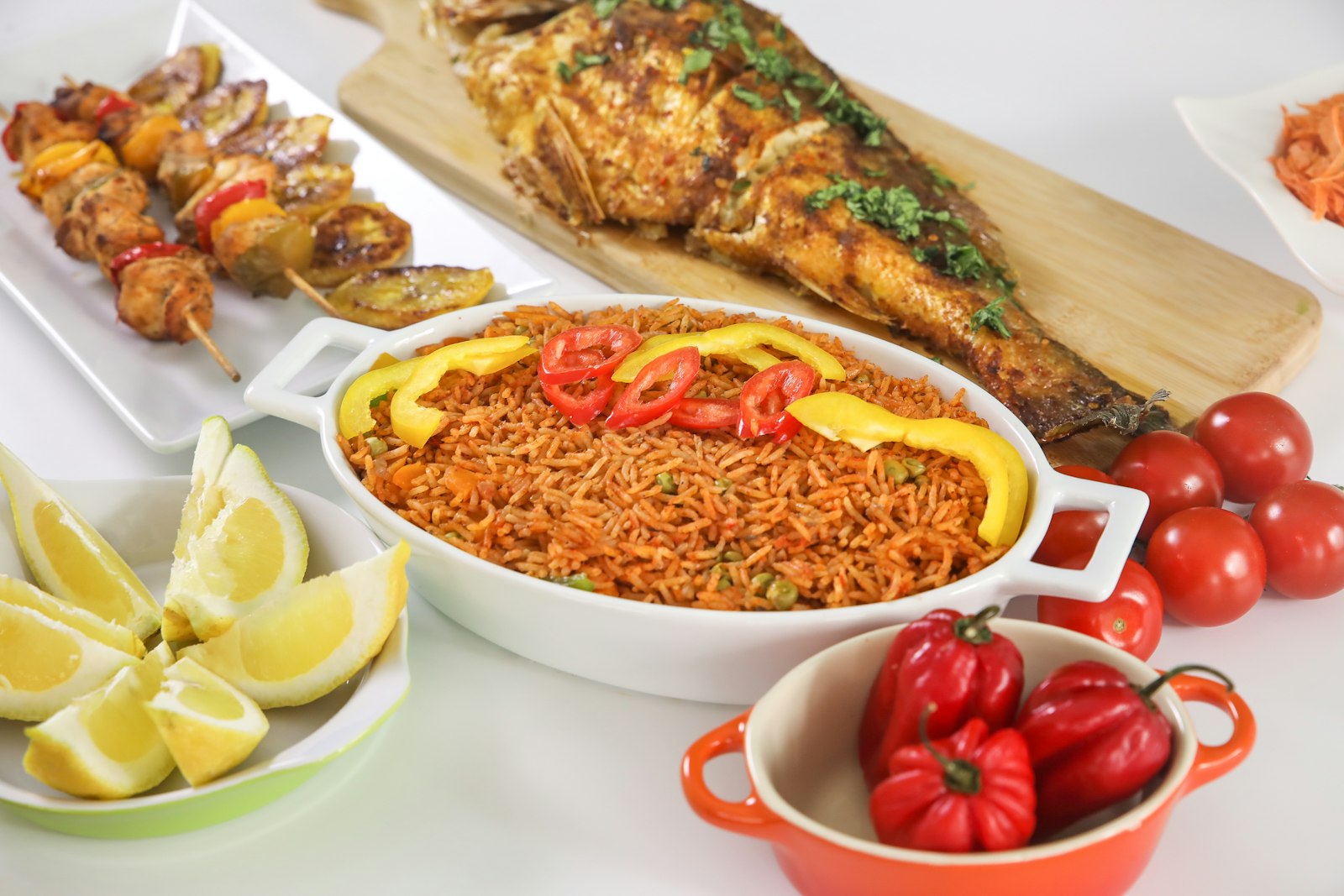
Three rice-and-meat dishes, three different traditions. Here's a straightforward breakdown so you know exactly what you're ordering.
Mandi, biryani and kabsa get grouped together constantly because they look similar on a plate — rice, meat, often served on one large tray. But they come from different culinary traditions and are built in genuinely different ways.
Mandi (Yemen / Hadhramaut)
Meat and rice are cooked together in a sealed, smoke-filled pit or oven, with the meat suspended above the rice so its juices drip down. Spicing is light — cardamom, cloves, loomi — and the defining flavour is smoke, not spice layering. Rice stays mostly pale, occasionally tinted gold with a touch of saffron.
Biryani (Indian subcontinent)
Rice and meat are usually cooked separately — the meat in a deeply spiced, often yoghurt-based masala — then layered together and finished on low heat ('dum') so the flavours merge. Biryani leans on a complex spice stack (chilli, garam masala, saffron, fried onions) and the rice itself is usually far more vividly coloured and intensely flavoured than Mandi's.
Kabsa (Saudi Arabia / wider Gulf)
Kabsa's rice is cooked directly in a spiced tomato-based stock, giving it a reddish-orange colour and a tangier, more tomato-forward flavour than Mandi. Meat can be grilled, roasted or cooked in the same pot. It's closer to a one-pot stew-rice than Mandi's smoke-and-drip method.
The short version
- Mandi — smoke-cooked, pale rice, restrained spicing
- Biryani — layered, heavily spiced, vividly coloured rice
- Kabsa — tomato-based stock rice, tangier and more savoury
All three are excellent — they're just not the same dish wearing different names. If it's Mandi you're after, make sure the kitchen is actually using the smoke-and-drip method, not just rice with meat served on top.