

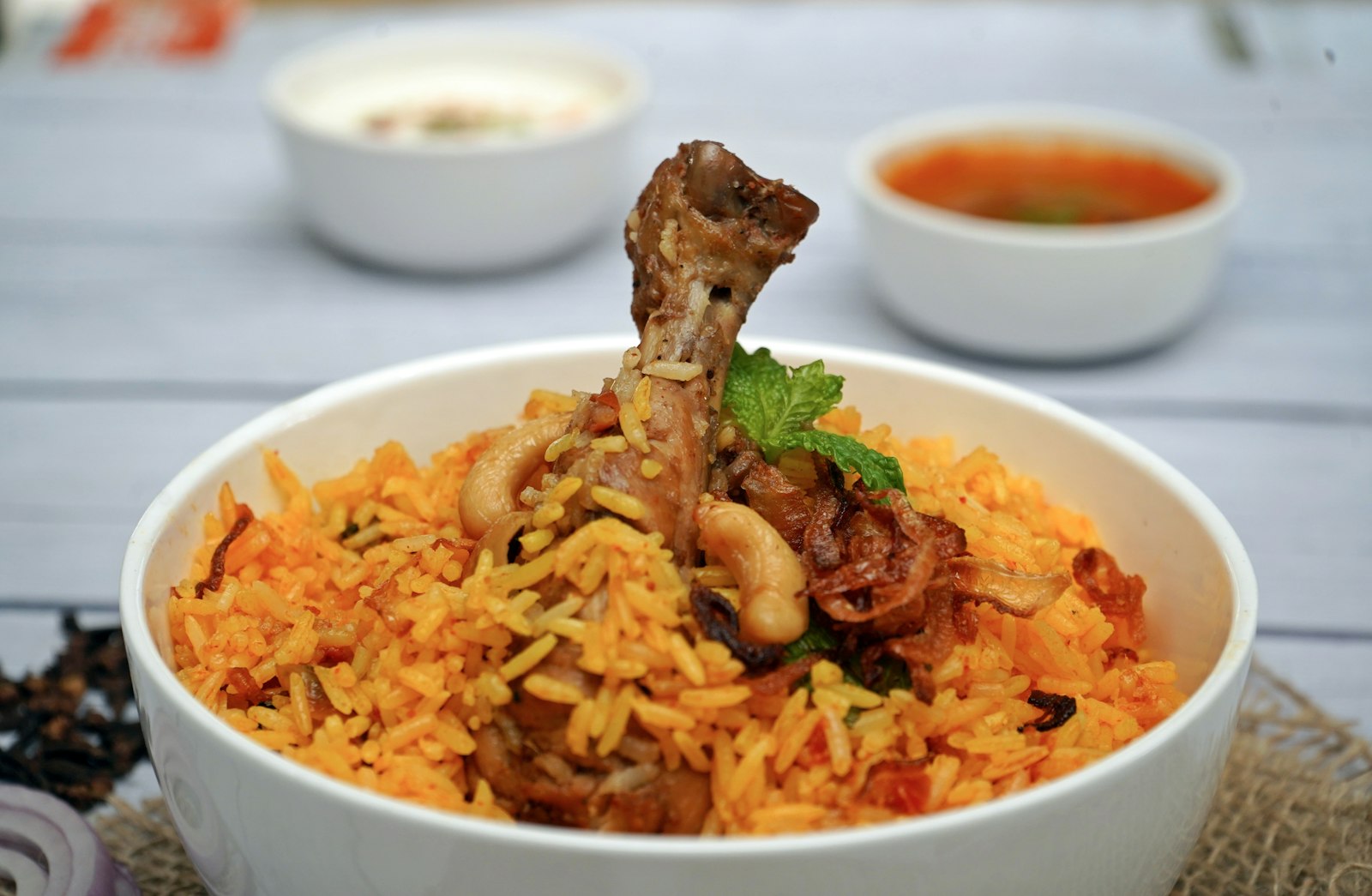
Mandi, kabsa, biryani — the names get used interchangeably, but they're genuinely different dishes. Here's what actually defines Mandi.
Mandi originates from Hadhramaut and Yemen, and later became a staple across the Arabian Peninsula as trade routes carried it north into Saudi Arabia, Yemen and the Gulf. At its core, it's a method as much as a recipe: meat and rice cooked together using smoke and trapped heat, rather than meat cooked separately and served over rice.
The traditional cooking method
Classic Mandi is cooked in a 'madfun' — a pit dug into the ground, lined with hot coals. Seasoned meat is suspended over a pot of partially-cooked basmati rice, the whole thing is sealed to trap smoke and heat, and left to cook slowly for hours. The meat's fat and juices drip down into the rice below, which is why properly made Mandi rice tastes smoky and savoury on its own — the flavour isn't added afterward, it's cooked in.
Modern restaurant kitchens (ours included) typically use a sealed underground-style oven that recreates the same slow, trapped-heat, drip-down effect without literally digging a pit for every service — the result is the same traditional flavour, just repeatable at scale.
The spice blend
Mandi's seasoning is comparatively restrained next to biryani's layered spice mix — usually cardamom, cloves, black pepper, cumin, and dried black lime (loomi), which gives Mandi its faint citrus-smoke character. The goal isn't a bold spice hit; it's a background warmth that lets the smoke and the meat itself lead.
Mandi today
In Dubai, Mandi has become a everyday-dining staple well beyond its Yemeni roots — ordered for family lunches, office gatherings, and date-night splurges alike, usually served family-style on a shared platter with daqoos sauce and a simple salad on the side. That communal, shared-platter format is as much a part of the dish as the rice itself.